
From room deodorizers to cleaning products, perfumes and fragrances are everywhere. They may be pleasant smelling, but they often contain harmful chemicals that may cause irritation or even more serious health problems over the long term.Luckily, there are some natural alternatives that smell great and don’t pollute the air.
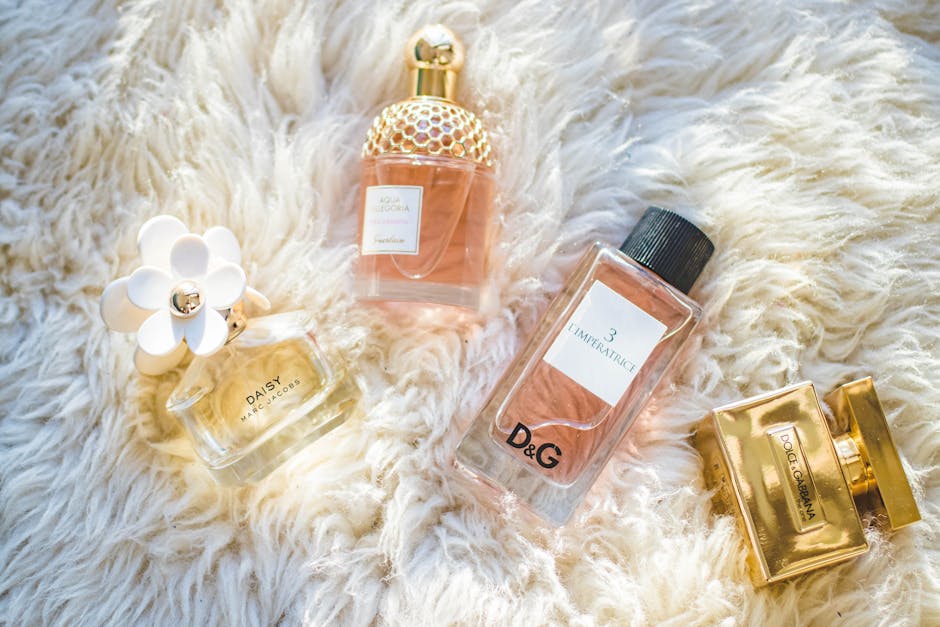
History of Perfume
Mentioned in Egyptian hieroglyphics as early as 3,000 BC, perfume has been around for thousands of years. An ancient Mesopotamian cuneiform tablet from 1,200 BC mentions a woman named Tapputi who distilled flowers and other aromatics with oil to make her perfumes.Perfumery made its way to Europe as early as the 14th century where it became popular amongst royalty (mostly to mask body odor).But while ancient perfumes got their scent from flowers and other natural aromatics, modern perfumes are another story. Beginning in the late 19th century, chemists began to isolate compounds from aromatic oils. These more stable synthetic versions held their scent longer.Perfumes now rarely use all-natural ingredients, but instead are a chemical mixture very different from the perfume made for centuries (and even millenia).
What’s in Perfumes and Fragrances?
Unfortunately, modern perfume is increasingly full of chemicals. Because of a loophole in the Federal Fair Packaging and Labeling Act of 1973 (which requires companies label the ingredients in their products, except for fragrance) companies can pour unsafe or untested chemicals into products and consumers have no way of knowing about it.Companies can lump any number of chemicals into “fragrance” (whether or not they are really present for fragrance purposes) because fragrance is considered a trade secret and doesn’t need to be disclosed.When the Environmental Working Group (EWG) tested the chemicals in some popular perfumes they found that on average there were 14 unlisted chemicals in each perfume, some of which are known hormone disruptors and allergens. Others are completely untested for safety in personal care products by the USDA, International Fragrance Association, or any other organization.Manufacturers today use approximately 3,100 ingredients in different combinations to create perfumes and fragrances. A report by the National Academy of Sciences found that 95% of chemicals used in fragrances are synthetic petrochemicals (derived from petroleum).Three of those chemicals are:
Phthalates
This chemical is linked to autism, ADHD, and neurological disorders and is banned in EU, Japan, South Korea, Canada, and China.Studies also link phthalates to cancer, endocrine disruption, and developmental and reproductive toxicity. Other studies link phthalates to sperm damage and altered genital development in boys.
Musk Ketone
This synthetic fragrance ingredient builds up in fatty tissue and breast milk. It’s also suspected to cause cancer and is toxic to the environment.
Formaldehyde
Formaldehyde is often found in plug-in fragrance warmers and air fresheners amongst other products. The CDC admits that formaldehyde is a known human carcinogen and the more we are exposed to it the bigger the chances of cancer. Unfortunately formaldehyde is not only found in our perfumes and fragrances but also in many kinds of conventional furniture and building materials.Consider: These are just three of the 3,100 chemicals used in fragrances! Clearly they aren’t as benign as fragrance manufacturers would like us to believe.
Symptoms of Fragrance Sensitivity
While many people complain of sensitivity to perfumes, laundry detergents, and other fragranced products, a 2017 study in Australia found that the concern is based on data as well. The study found that many residents could not be around fragrance without health effects.Fragrance chemicals can cause symptoms such as:
- reduced lung function, respiratory irritation, increased asthma
- allergic reactions
- birth defects
- mucosal symptoms
- migraine headaches
- skin problems
- cognitive problems
- gastrointestinal problems
- and the list goes on!
Clearly fragrance should be avoided, but unscented products aren’t the answer either.
What About Unscented Products?
Often, unscented products contain chemicals that mask the smell of the other chemicals in the product, they just don’t have a floral, musky, or similar scent. It’s basically a fragrance without the strong fragrance smell.Also, there are very few ingredients in conventional perfumes (or other products that contain fragrance) that aren’t objectionable. While fully labeling ingredients would be a good thing, it hardly matters when there are so many other ingredients in these products that I prefer to stay away from entirely.
Alternatives to Fragrances and Perfumes
If people made perfume for thousands of years without synthetic chemical-laden fragrances, I’m guessing perfumes and other scented products can be made that way again!Here are some of my favorite ideas for smelling nice, naturally 🙂
DIY Room Fragrance
These simple homemade air freshener recipes are made with essential oils, so they actually have health benefits! Sweet orange essential oil not only uplifts the mood but also has potent antifungal properties. Lemon has both antibacterial and antiviral properties and also is said to lift the mood. Ginger helps with focus and energy by stimulating the mind and may help with depression.
DIY Perfume
As a mom of small children I’m lucky if I get a shower most days (sound familiar?), so perfume can come in pretty handy. I decided to create my own blend and came up with a pretty combination. Fun fact: the wearer’s body chemistry changes the scent, so it’s truly custom!Source: https://wellnessmama.com/386356/perfumes-fragrances/

 Sharing is Caring